
Calyx Krater (Mixing Bowl)
Perugia Painter · about 400-380 BCE
Analyst brief
What the record supports
The Calyx Krater (Mixing Bowl) is a red-figure terracotta vessel, attributed to the Perugia Painter and dated to approximately 400-380 BCE. Measuring 43.8 × 46.7 × 46.4 cm, it is classified as a vessel from Basilicata. The object's artistic style and subject matter, as well as specific figures depicted, are not described in the provided catalogue data.
The krater's provenance indicates it was "Said to be found in Capua, 1883." It was acquired by Augusto Mele, Naples, Italy, and subsequently sold to the Art Institute of Chicago in 1889 through agent J.C. Fletcher. The purchase price was reimbursed by Philip D. Armour and Charles L. Hutchinson, who later gifted the object.
The Calyx Krater has been exhibited at the Art Institute of Chicago multiple times, including "Myth and Legend in Classical Art" (1987) and "Of Gods and Glamour" (2012-2017), and at The Field Museum of Natural History for "Ancient Mediterranean Cultures in Contact" (2017-2018). It has also been cited in various scholarly publications since 1889, including works by J.D. Beazley and the Lexicon Iconographicum Mythologiae Classicae.
Generated from the catalogue fields shown on this page. Nartmad does not assert attributions, valuations or prices that no cited source supports.
Provenance
Ownership history
- Said to be found in Capua, 1883 [Old Register at the Art Institute of Chicago]. Augusto Mele, Naples, Italy; sold tothe Art Institute of Chicago through J.C. Fletcher as agent, 1889; price reimbursed by Philip D. Armour and Charles L. Hutchinson.
Recorded by Art Institute of Chicago.
Exhibitions
Exhibition history
- The Art Institute of Chicago, Myth and Legend in Classical Art, Gallery 101A, March 1, 1987-August 31, 1987.
- The Art Institute of Chicago, Of Gods and Glamour: The Mary and Michael Jaharis Galleries of Greek, Roman, and Byzantine Art, November 11, 2012-March 20, 2017.
- The Field Museum of Natural History, Chicago, Ancient Mediterranean Cultures in Contact, October 20, 2017-April 29, 2018.
Literature
Published references
- William M.R. French, Notes [on a] journey to Europe with Mr. and Mrs. C.L. Hutchinson starting from New York Sat'y Mch. 9, 1889- , p. 24.
- Art Institute of Chicago, Preliminary Catalogue of Metal Work, Graeco-Italian Vases, and Antiquities, December 9, 1889 (Chicago: Early and Halla Printing Company, 1889), p. 38, no. 324.
- A. Furtwängler, Neue Denkmäler antiker Kunst: Antiken in den Museen von Amerika III (Munich 1905), p. 248 no. 7 (Kleine Schriften ii, 492).
- Bulletin of the Art Institute of Chicago, vol. 5, no. 3 (January 1912), p. 43.
- J.D. Beazley, “Gleanings in Etruscan red-figure”, in Festschrift Andreas Rumpf. Zum 60. Geburtstag dargebracht von Freunden und Schülern. Köln im Dezember 1950, edited by T. Dohrn (Krefeld 1952), pp. 10-11, pl. 3.
- P. Bocci Pacini, "Il pittore di sommavilla Sabina ed il problema della nascita delle figure rosse in Etruria," in Studi Etruschi, vol. 50, serie III (1984), p. 32.
- Lexicon Iconographicum Mythologiae Classicae (LIMC), VI (no. 228) and VII (1990).
- Martine Denoyelle, "Sur la personnalite' du peintre d'arno un point de jonction entre grande-grece et etrurie," in Revue Archeologique, Nouvelle Serie, Fasc. 1 (1993), p. 66.
- Karen B. Alexander, "From Plaster to Stone: Ancient Art at the Art Institute of Chicago," in Karen Manchester, Recasting the Past: Collecting and Presenting Antiquities at the Art Institute of Chicago (Chicago: Art Institute of Chicago; New Haven: Yale University Press, 2012), p. 18.
Comparables
Related holdings by the same hand

Plate with The Lover Tormented
The Metropolitan Museum of Art
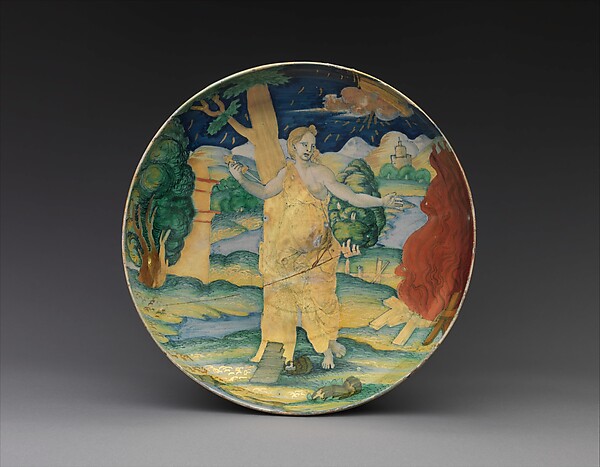
Shallow bowl depicting the Suicide of Dido
The Metropolitan Museum of Art
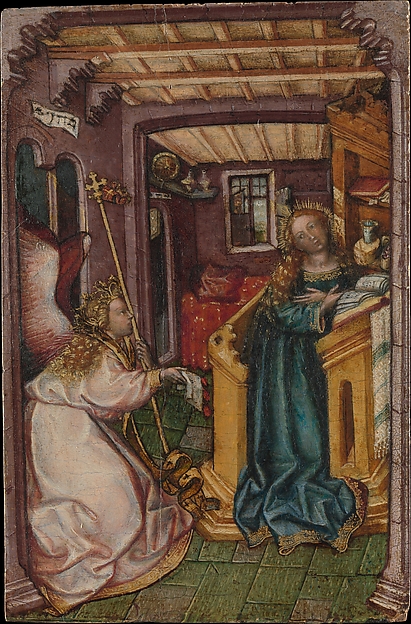
The Annunciation
The Metropolitan Museum of Art
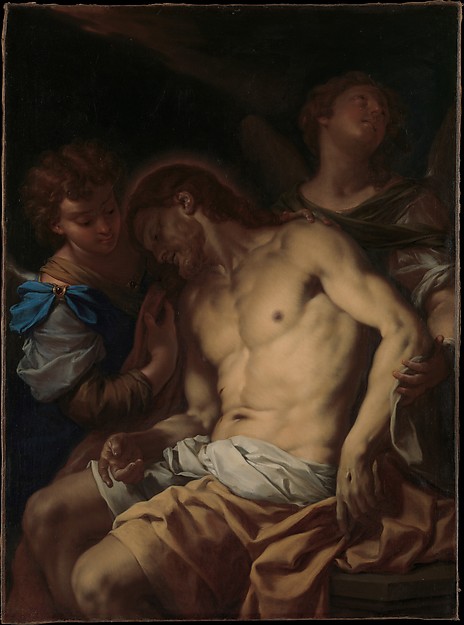
Dead Christ Supported by Angels
The Metropolitan Museum of Art
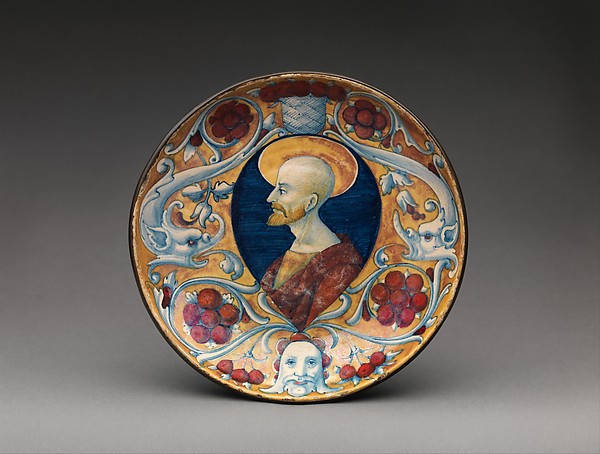
Shallow bowl with a bearded saint
The Metropolitan Museum of Art
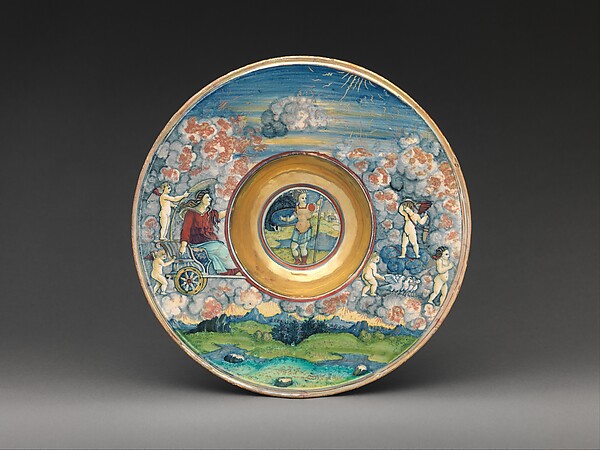
Wide-rimmed bowl depicting figures from Virgil's Aeneid
The Metropolitan Museum of Art

Wide-rimmed bowl with figures from Virgil's Aeneid
The Metropolitan Museum of Art
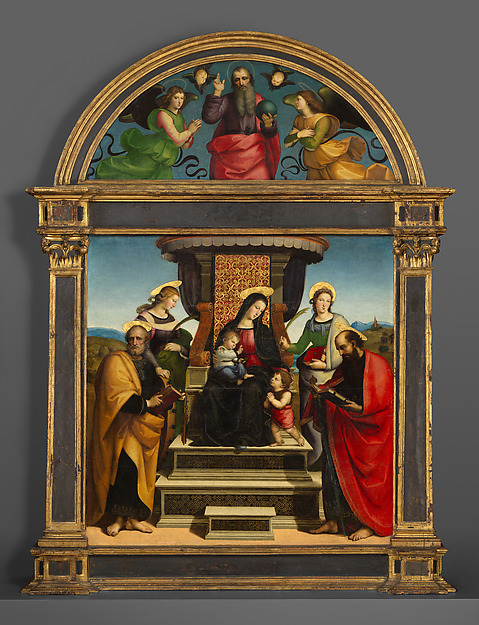
Madonna and Child Enthroned with Saints
The Metropolitan Museum of Art
Museum holdings, not sale records. Auction results are only shown when a licensed price source is connected.
Research assistant