
Saints Augustine and Peter
Paolo Veneziano · c. 1350
Analyst brief
What the record supports
"Saints Augustine and Peter" is an artwork by Paolo Veneziano, dated approximately 1350. The piece is a tempera on panel, measuring 77.4 × 49.5 cm (30 1/2 × 19 1/2 in.), with its framed dimensions being 101 × 59.7 cm (39 3/4 × 23 1/2 in.). It is categorized under Painting and Sculpture of Europe, representing Venetian culture.
The provenance records indicate the work was previously held by Grimaldi, Venice, and subsequently The Roerich Museum, New York, before being sold in 1930. It was acquired by Catherine Barker Spaulding Hickox, who later gifted it to the Art Institute of Chicago in 1958. During its time with Mrs. Hickox, the artwork was on loan to the Art Institute from 1932.
The painting was featured in "A Century of Progress Exhibition of Paintings and Sculpture" at The Art Institute of Chicago in both 1933 and 1934. Multiple publications have referenced the artwork, including articles in *Art News* and *Art Digest* from 1930, and various books on Venetian painting from 1957 to 1964. The artist, Paolo Veneziano, was an Italian painter active between approximately 1300 and 1365. No birth or death nationality is specified in the artist authority record.
Generated from the catalogue fields shown on this page. Nartmad does not assert attributions, valuations or prices that no cited source supports.
Provenance
Ownership history
- Grimaldi, Venice (according to the Roerich Museum sale catalogue); The Roerich Museum, New York; sold American Art Association, New York, March 28, 1930, no. 151 (ill.), as Lorenzo Veneziano, to Robert B. Harshe acting on behalf of Catherine Barker Spaulding Hickox (Harshe was listed as the buyer in the published results of the Roerich sale); Catherine Barker Spaulding Hickox, Michigan City, Indiana, and New York, 1930–58; on loan to the Art Institute from 1932; given to the Art Institute, 1958.
Recorded by Art Institute of Chicago.
Exhibitions
Exhibition history
- The Art Institute of Chicago, A Century of Progress Exhibition of Paintings and Sculpture, June 1 to November 1, 1933, no. 88, as School of Lorenzo Veneziano.
- The Art Institute of Chicago, A Century of Progress Exhibition of Paintings and Sculpture, June 1 to November 1, 1934, no. 36, as School of Lorenzo Veneziano.
Literature
Published references
- Frank Jewett Mather, Jr., “Roerich Museum to Sell Many Old Masters,” Art News 28, 20 (1930), p. 3.
- “Roerich Museum Is to Sell Its Old Masters,” Art Digest 4, 11 (1930), p. 15.
- Daniel Catton Rich, “Two Trecento Venetian Panels,” Bulletin of the Art Institute of Chicago 24 (1930), pp. 86–89 (ill.).
- Evelyn Sandberg-Vavalà, “Maestro Paolo Veneziano,” Burlington Magazine 57 (1930), pp. 171, 177.
- The Art Institute of Chicago, A Guide to the Paintings in the Permanent Collection, 1932, p. 192.
- Bernard Berenson, Italian Pictures of the Renaissance: Venetian School, 2 vols., London, 1957, vol. 1, p. 127.
- Evelyn Sandberg-Vavalà, “Maestro Paolo Veneziano: His Paintings in America and Elsewhere,” (1939) in Michelangelo Muraro, Paolo da Venezia, University Park, Pennsylvania, and London, 1970, pp. 97, 98 n. 7.
- Sergio Bettini, Pitture cretesi-veneziane, slave e italiane del Museo Nazionale di Ravenna, Ravenna, 1940, p. 100 n. 1.
- Rodolfo Pallucchini, La pittura veneziana del trecento, Lezioni tenute alla Facoltà di Lettere dell’Università di Bologna, Bologna, 1955, p. 131.
- The Art Institute of Chicago, Paintings in The Art Institute of Chicago: A Catalogue of the Picture Collection, 1961, p. 350.
- Hans Huth, “Italienische Kunstwerke im Art Institute von Chicago, USA,” in Miscellanea Bibliothecae Hertzianae, Munich, 1961, p. 516.
- Rodolfo Pallucchini, La pittura veneziana del trecento, Venice and Rome, 1964, p. 51, fig. 172.
Comparables
Related holdings by the same hand
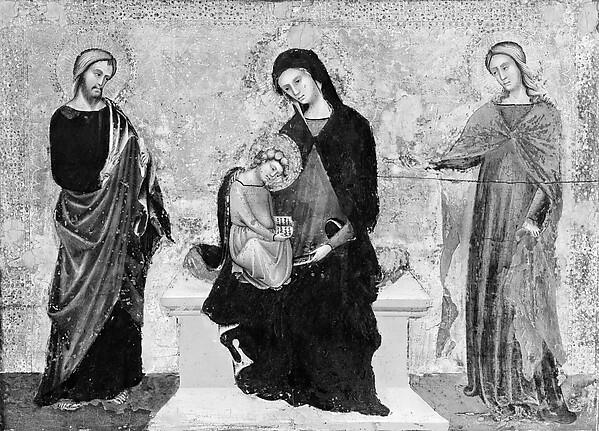
Madonna and Child Enthroned with Saints James Minor and Lucy
The Metropolitan Museum of Art
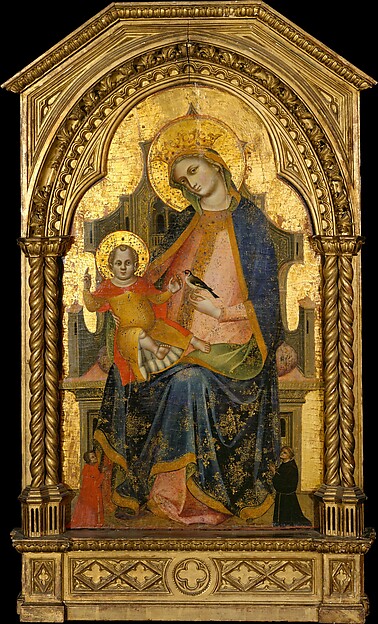
Madonna and Child Enthroned with Two Donors
The Metropolitan Museum of Art
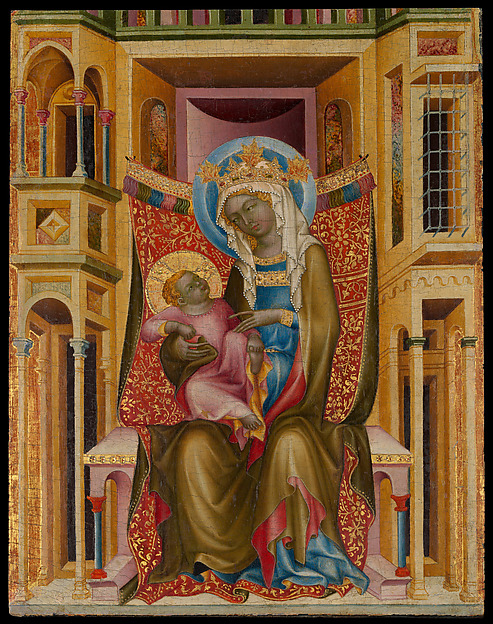
Virgin and Child Enthroned
The Metropolitan Museum of Art
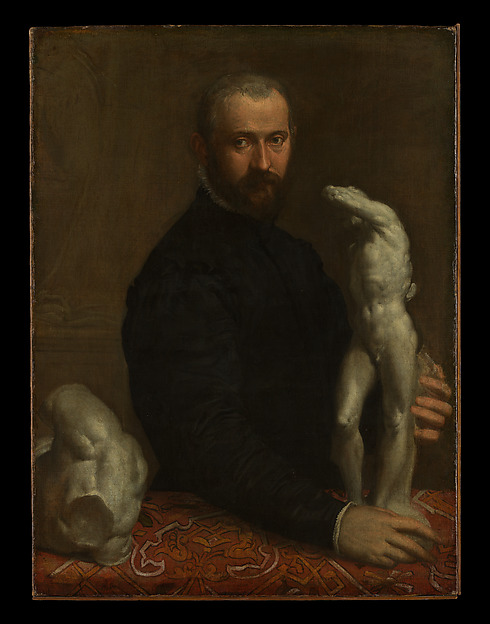
Alessandro Vittoria (1525–1608)
The Metropolitan Museum of Art

Madonna and Child Enthroned
The Metropolitan Museum of Art

Standing Youth Leaning on a Long Staff (recto); Seated Man (verso)
The Metropolitan Museum of Art
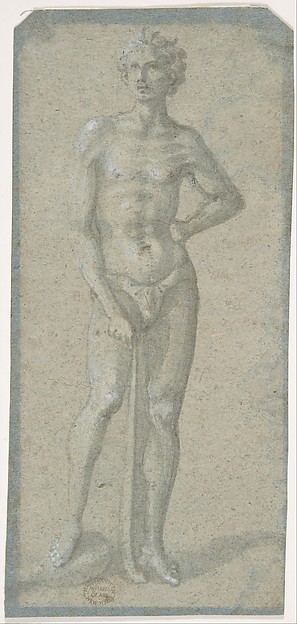
Standing Youth Holding a Club (recto); Temptation of Adam and Eve (verso)
The Metropolitan Museum of Art
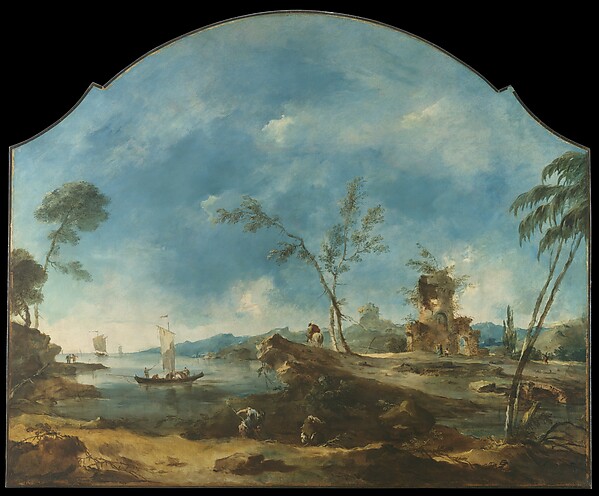
Fantastic Landscape
The Metropolitan Museum of Art
Museum holdings, not sale records. Auction results are only shown when a licensed price source is connected.
Research assistant