
The Card Game
Utagawa Toyokuni I · c. 1790
Provenance
Ownership history
- Yamanaka & Company; sold to Kate Sturges Buckingham (1858–1937), Chicago, 1919; given to the Art Institute of Chicago, 1925.
Recorded by Art Institute of Chicago.
Exhibitions
Exhibition history
- Didactic:
- JAPAN’S IMMORTAL POETS
- BY EDO PERIOD (1615–1868) MASTERS OF
- WOODBLOCK PRINTS, PART ONE
- Japan has a long tradition of poetry dating back to the beginning of its recorded history. The earliest collection, probably compiled in the late ninth century, is Manyôshû (Collection of Ten Thousand Leaves). This was followed by twenty-one imperial anthologies. The first, ordered by Emperor Daigo (880–930), was completed around 905. This anthology, Kokinshû, set the pattern for the other twenty to follow. In almost every case, the compilation was managed by successive leaders of the Fujiwara clan, who held political power second only to that of the imperial family. These anthologies document more than 32,000 poems. Today, most are available in their original form and in modern Japanese; selections are also translated into Western languages.
- In the preface to Kokinshû, the compilers called attention to six poets who displayed modern style. These six became known as the Poetic Immortals. Included were Ariwara no Narihira and Ono no Komachi, two of Japan’s greatest poets. Tales of Ise (Ise Monogtatari), another important source of early poetry, is also attributed to Ariwara no Narihira, even though only thirty-five of the more than two hundred poems included can be traced to him. Compiled around 950, this work is a loose series of scenes written around each featured poem.
- In 1235 Fujiwara no Teika (1162–1244), the leading compiler of the eighth imperial anthology, issued a guide for students of poetry, which is still studied for theories of poetic expression. He named the one hundred greatest Japanese poets, including one poem by each. Thirty-seven of them were by members of the Fujiwara clan, including his own, number ninety-seven.
Comparables
Related holdings by the same hand
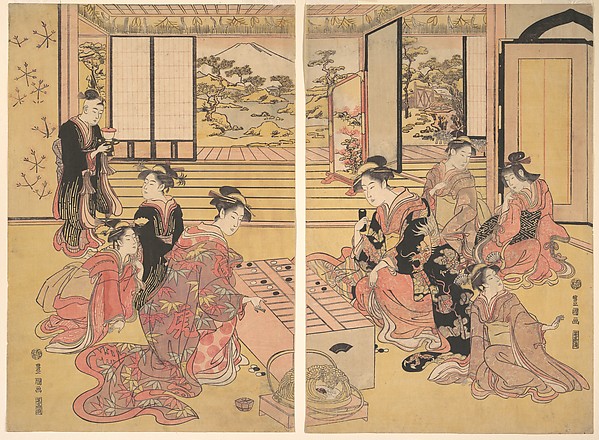
Two Young Women Playing a Game of Sugoroku
The Metropolitan Museum of Art
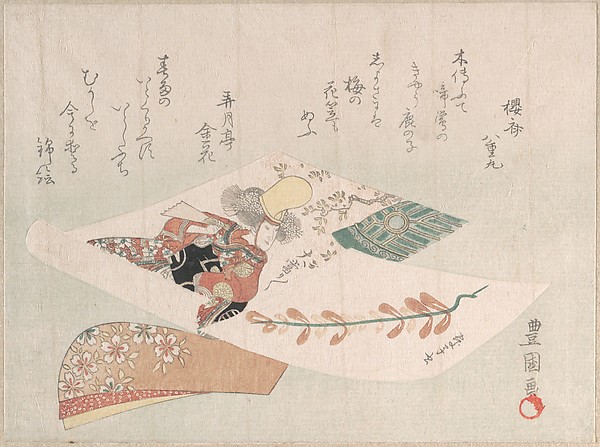
Representation of the Dance-Play "Dōjōji"
The Metropolitan Museum of Art
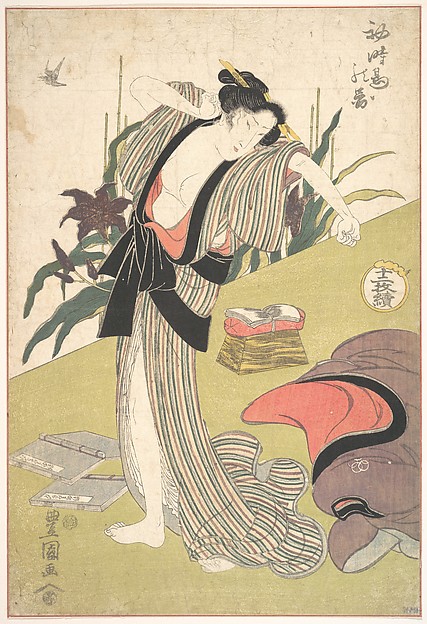
The First Visit of the Cuckoo
The Metropolitan Museum of Art
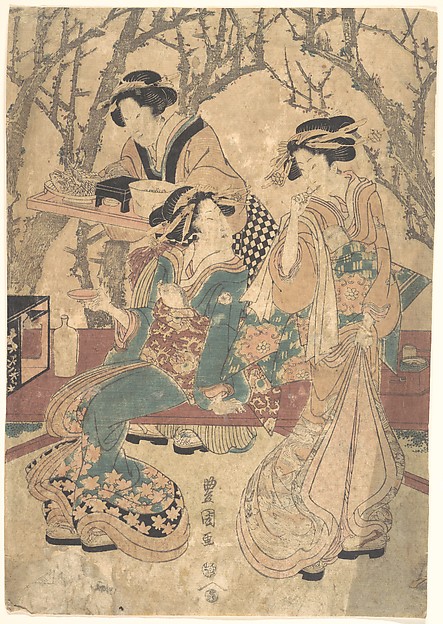
Three Women Dining Before a Group of Trees
The Metropolitan Museum of Art
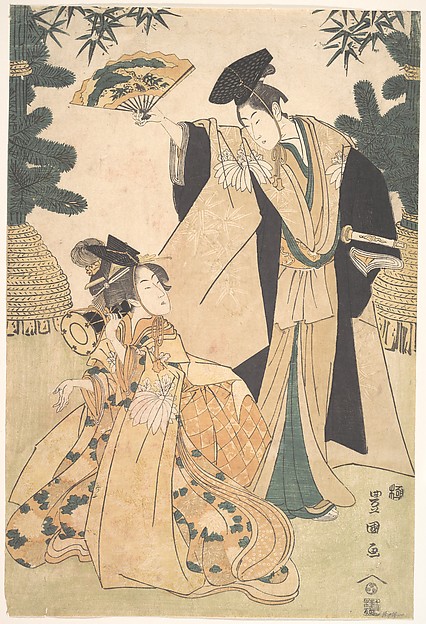
Young Lady with Drum and Man with Fan Saluting Her
The Metropolitan Museum of Art
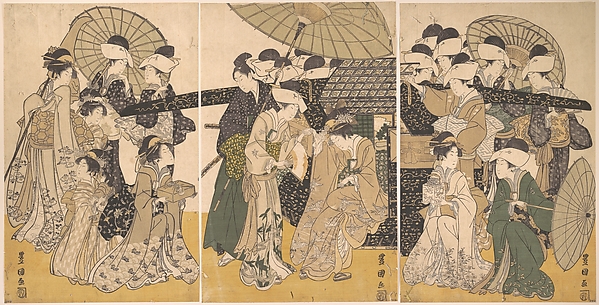
Famous Beauty Escorted by Women of Different Rank
The Metropolitan Museum of Art
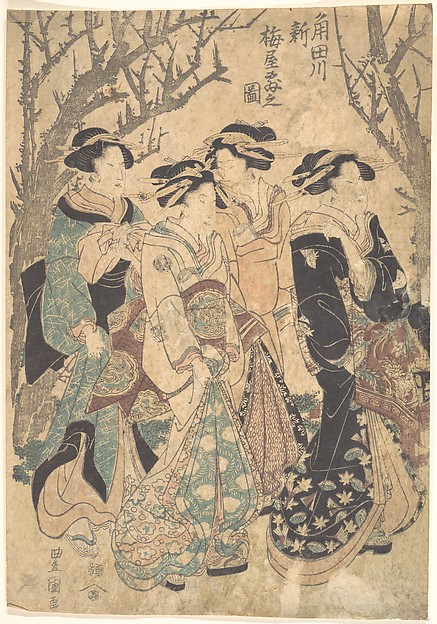
Four Women Passing a Group of Trees
The Metropolitan Museum of Art
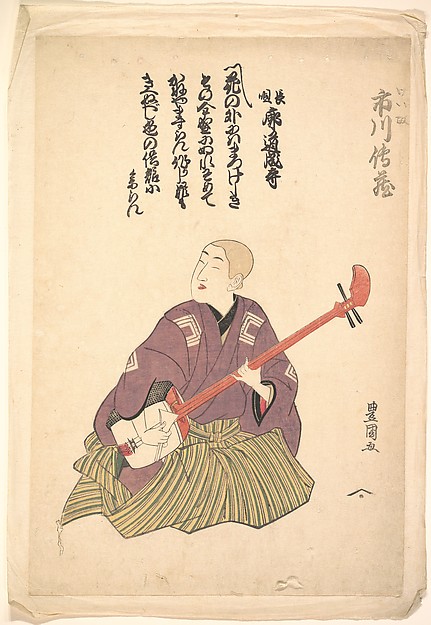
Keisei Ichikawa Denzo
The Metropolitan Museum of Art
Museum holdings, not sale records. Auction results are only shown when a licensed price source is connected.
Research assistant